Gedeb Banko Taratu
Banko Taratu

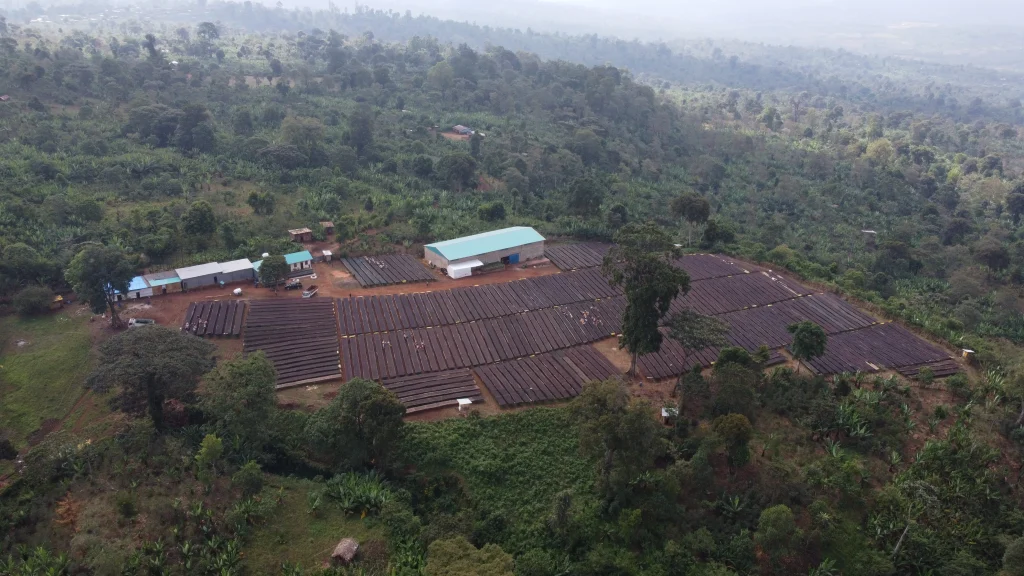
An overview of the processing techniques we employ here at EDN Coffee.
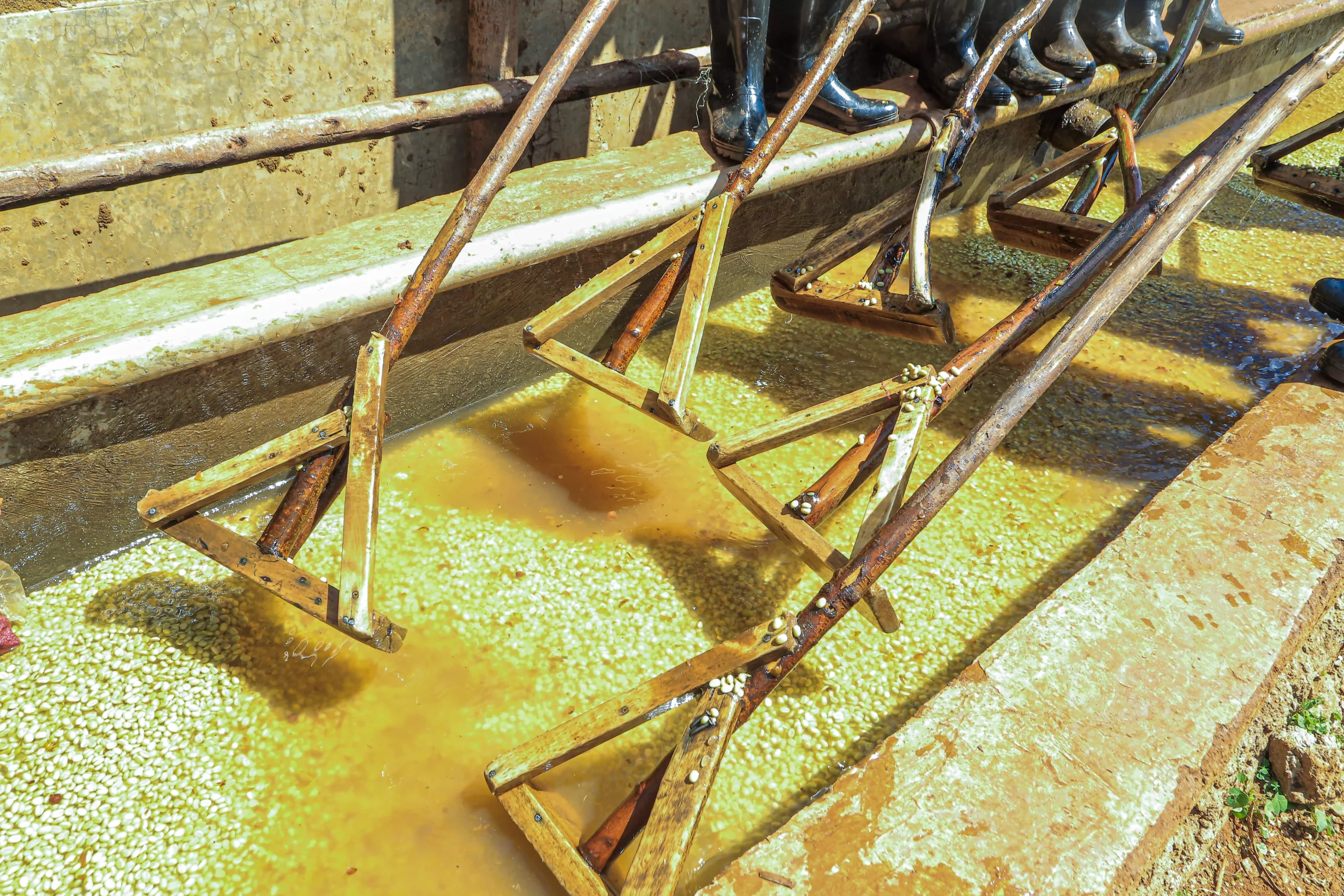
The washed coffee process, often referred to as wet processing, is a method used to remove coffee beans from the cherry before drying. The process begins with the careful handpicking of ripe, red coffee cherries to ensure optimal quality. Once harvested, the outer skin of the cherry is removed using a pulping machine, separating the beans from the fruit.
The beans, still coated with a layer of mucilage, are then placed in water to ferment for approximately 12 to 48 hours. This fermentation stage breaks down the remaining fruit residue. After fermentation, the beans are thoroughly washed to eliminate any remaining mucilage.
Following washing, the beans are dried in thin layers under the sun or in mechanical dryers until they reach an ideal moisture content of around 11%. Once dried, the coffee is transported to a local warehouse for careful sorting and hulling, during which the parchment layer is removed to reveal the green coffee beans. The beans are then prepared for roasting, with strict quality control maintained through to the final export stage.
The washed process is widely recognized for producing coffees with bright acidity and a clean, crisp flavor profile, as it allows the inherent characteristics of the coffee to be clearly expressed
Taste profile
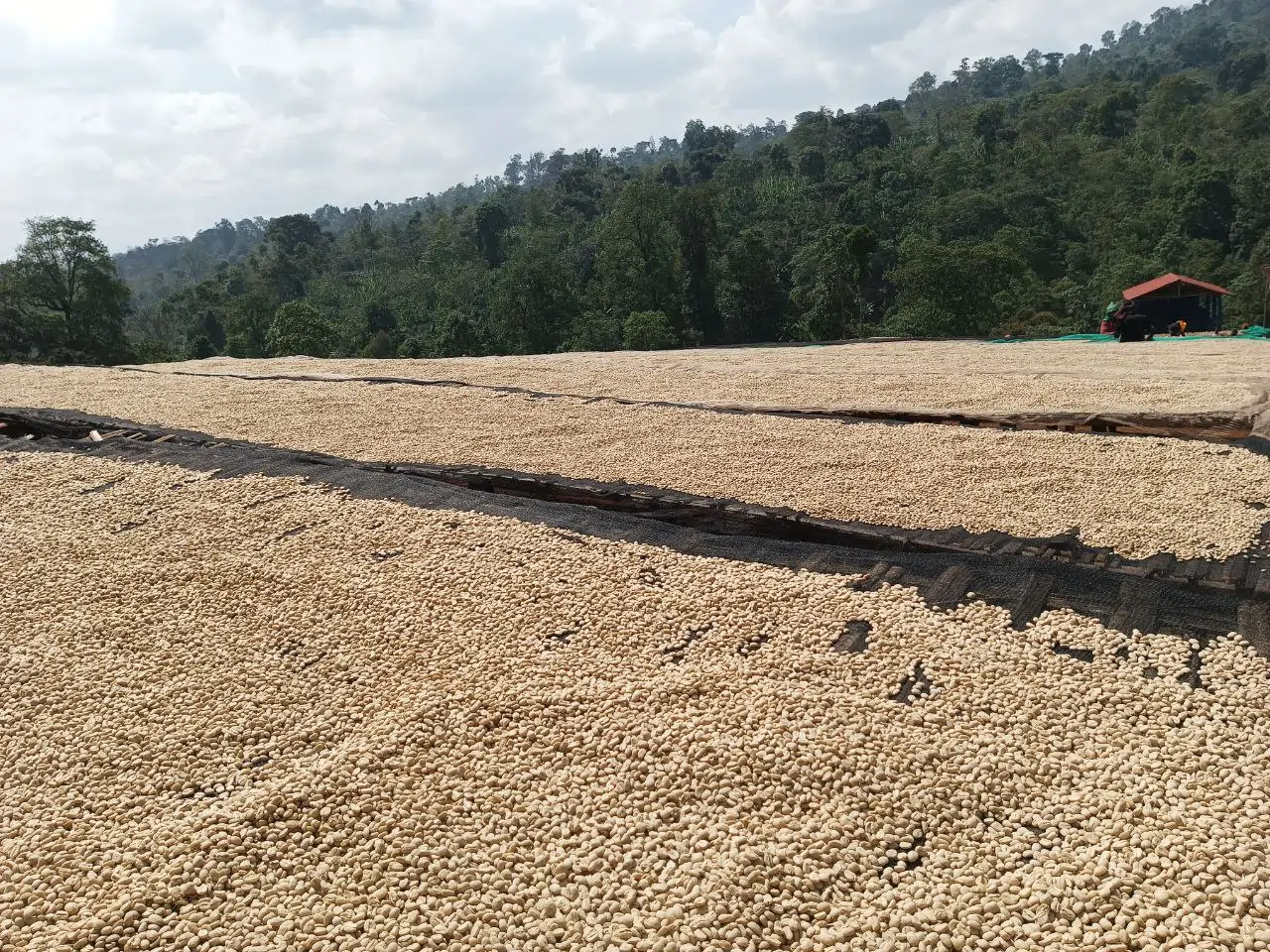
Double washed fermentation is a meticulous two-stage process designed to achieve exceptional clarity and balance in specialty coffee. The process begins like traditional washed coffee: ripe cherries are pulped and fermented underwater to remove most mucilage.
After the initial wash, the beans undergo a second soaking and fermentation in clean water. This extra step removes remaining residues lodged in fine surface cracks, refining the bean structure and enhancing consistency.
The coffee is then slowly dried on raised beds or patios to reach ideal moisture levels of 10.5%–11.5%, with careful monitoring and regular turning to prevent defects.
Double washed coffees are prized for their clean profile, bright yet controlled acidity, improved texture, and crisp, refined finish that highlights the coffee’s origin character.
Taste profile
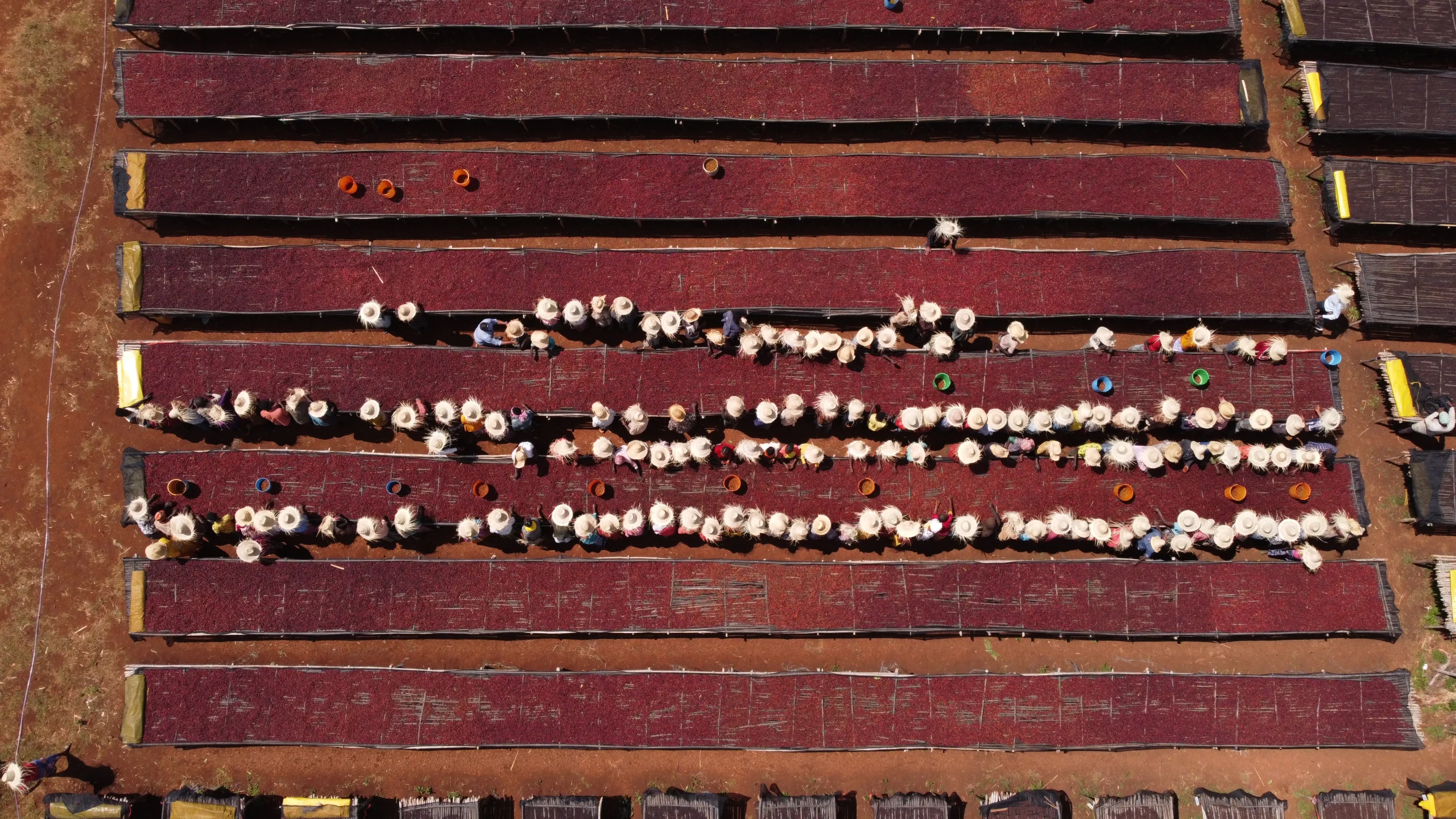
Natural coffee processing is widely recognized for producing a fruit-forward and intensely sweet flavor profile, largely due to the extended contact between the coffee bean and the cherry during drying. Compared to other processing methods, natural coffees tend to exhibit deeper, more pronounced flavors with rich sweetness and complexity. Common aroma and flavor notes often include blueberry, strawberry, and tropical fruit, complemented by a vibrant yet balanced acidity.
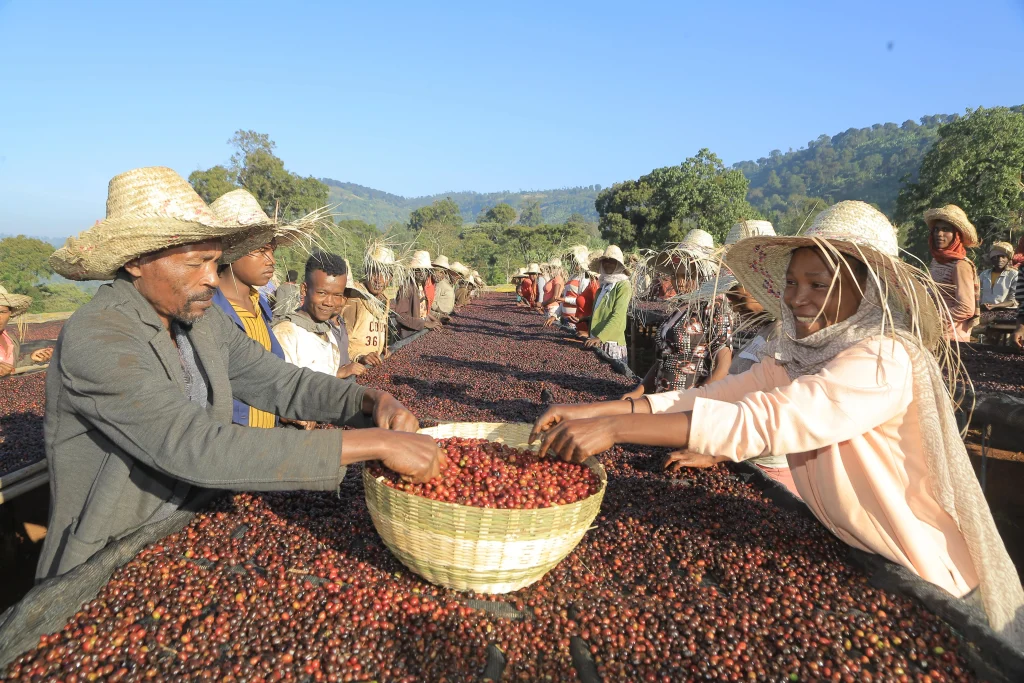
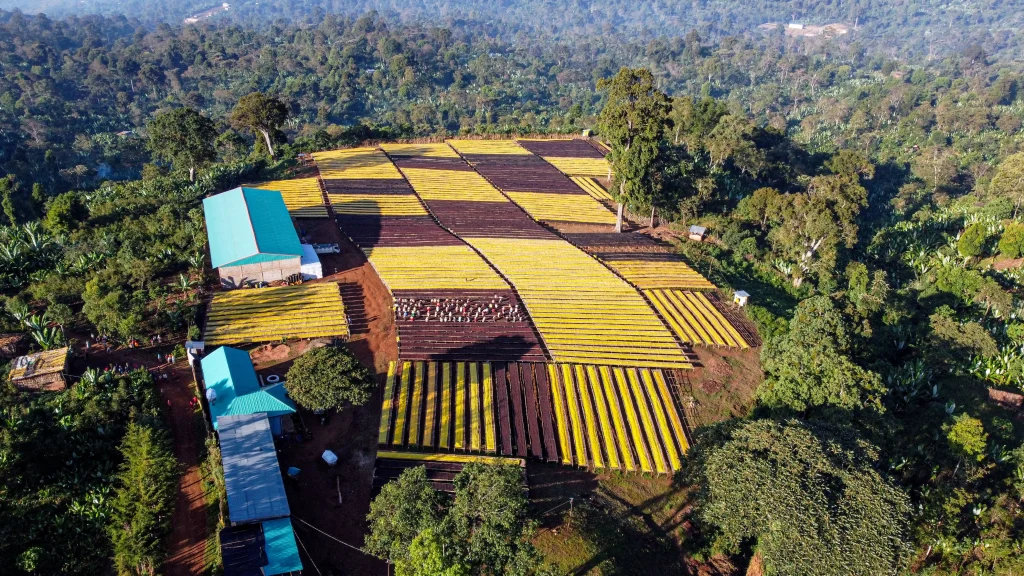
In this method, only fully ripe coffee cherries are carefully selected and, immediately after harvest, spread out on raised drying beds. These beds are designed to promote proper airflow and maintain consistent temperatures, ensuring even and controlled drying while the fruit and mucilage remain intact on the bean. The cherries are sun-dried over a period of approximately three to four weeks, during which they are regularly turned to prevent fermentation defects and ensure uniform moisture reduction.
Drying continues until the whole fruit reaches an ideal moisture content of approximately 11.5% to 12%. Once fully dried, the coffee is transported to Addis Ababa for milling, where the dried fruit layers are removed, and the green coffee is prepared under strict quality standards before final export.
Taste profile
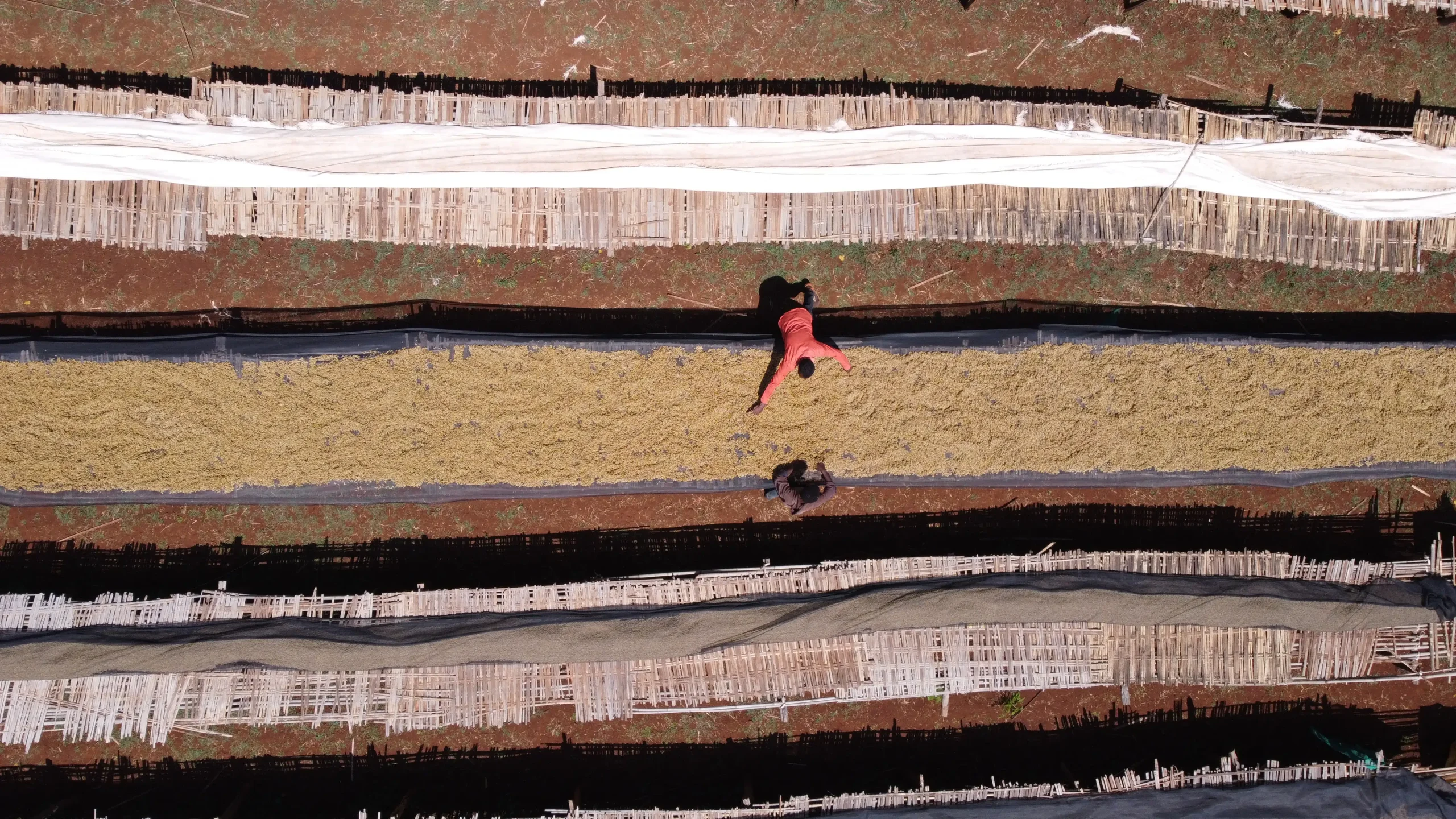
The honey process, also known as the pulped natural process, is a coffee processing method that sits between the fully washed and natural processes, combining elements of both to create a balanced and expressive cup profile. In this method, the outer skin of the coffee cherry is removed shortly after harvest, while a portion—or in some cases all—of the sticky, sugar-rich mucilage (commonly referred to as “honey”) is intentionally left attached to the parchment layer surrounding the bean.
Once pulped, the coffee is transferred directly to drying, without undergoing full fermentation in water. The beans are dried with the remaining mucilage intact, typically on raised African beds or patios. During this stage, careful attention is given to airflow, temperature, and regular turning to ensure even drying and to prevent over-fermentation or mold. The sugars in the mucilage slowly penetrate the bean during drying, contributing to increased sweetness and complexity.
The honey process offers a wide range of sensory outcomes depending on several variables, including the amount of mucilage retained, drying duration, climate conditions, and coffee varietal. Variations such as white, yellow, red, or black honey indicate increasing levels of mucilage and drying time, each resulting in distinct flavor expressions. Honey-processed coffees are often characterized by pronounced sweetness, a creamy or silky mouthfeel, balanced acidity, and layered flavor complexity.
Overall, the honey process provides a harmonious middle ground between the clean, crisp profile of washed coffees and the bold, fruit-forward intensity of natural coffees. Its ability to highlight sweetness while preserving clarity has made it increasingly popular among specialty coffee producers, roasters, and consumers seeking nuanced and distinctive flavor profiles.
Integrity guides every step of our coffee journey—ethical sourcing, transparent partnerships, and unwavering commitment to quality from origin to destination.
Teamwork drives our coffee journey—farmers, partners, and experts working together seamlessly to ensure consistent quality, shared growth, and lasting relationships across the value chain
Entrepreneurship guides our vision—embracing innovation, creativity, and adaptability while continuously identifying opportunities for sustainable growth, value creation, and competitive excellence in global coffee markets.
Excellence anchors our coffee journey—surpassing customer expectations through disciplined accountability, optimal resource utilization, meticulous sourcing, and uncompromising quality control for global markets.
Taste profile
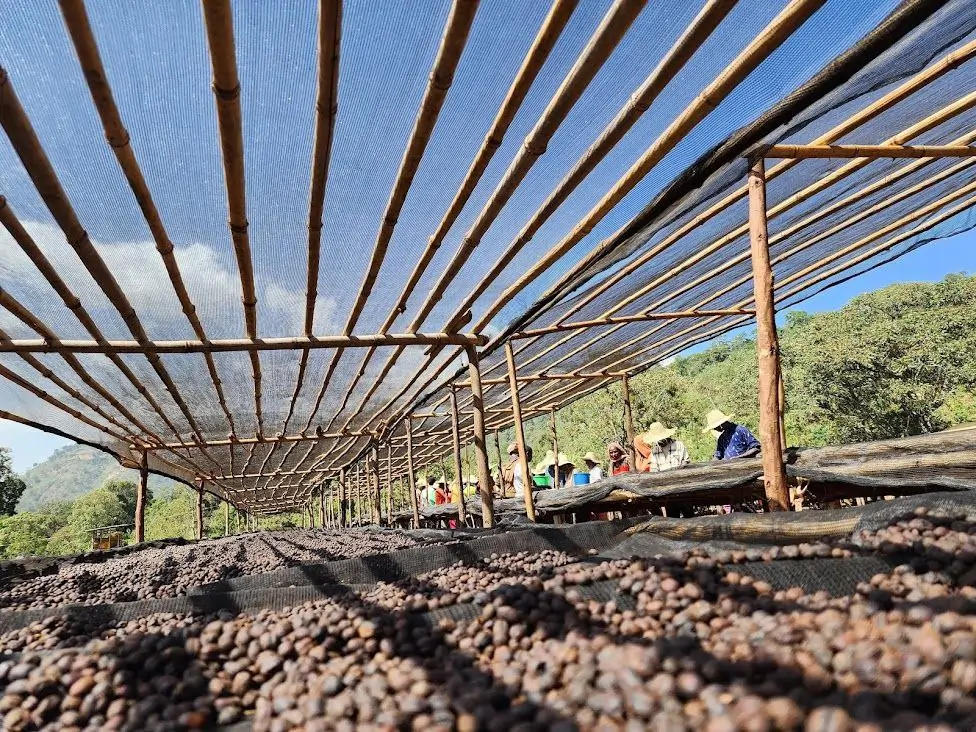
The Super Natural process begins with carefully handpicked ripe cherries, transported immediately to mill collection points for meticulous sorting and quality selection. Only the finest cherries proceed to processing, ensuring consistency and flavor integrity.
The coffee then undergoes cold anaerobic fermentation in sealed, oxygen-free tanks. This controlled environment allows precise management of sugar development, temperature, and pressure over seven to ten days at 15–18°C. This stage enhances fruit intensity while maintaining clarity and balance.
After fermentation, cherries are transferred to raised drying beds and slowly dried with regular turning to ensure even moisture reduction and prevent defects. Moisture is closely monitored until optimal levels are achieved before hulling, grading, and final quality control.
Super Natural coffees are celebrated for their vibrant sweetness, layered fruit complexity, and smooth, rounded mouthfeel.
Taste profile
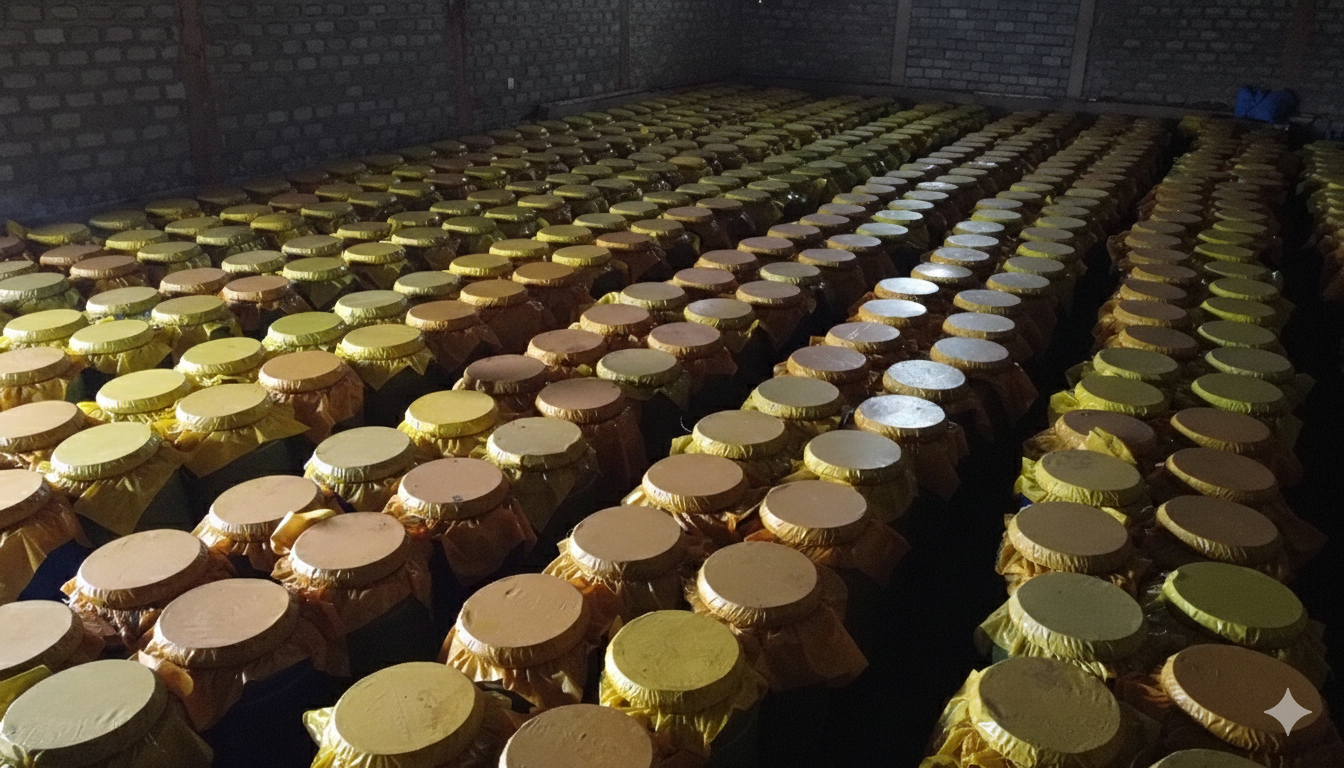
The anaerobic coffee process begins with the careful handpicking of ripe coffee cherries by farmers, followed by immediate transportation to designated mill collection points. At this stage, the cherries undergo rigorous sorting and selection to eliminate any overripe, under-ripe, or defective fruit, ensuring that only the highest-quality cherries proceed to processing.
After harvesting and sorting, the cherries are transferred to a cold anaerobic processing facility, where fermentation takes place in a fully oxygen-free environment. The coffee is sealed in pressurized tanks, allowing for precise control over critical variables such as temperature, pressure, and sugar development. This controlled environment enhances flavor complexity while preserving consistency and quality.
The anaerobic fermentation typically lasts between 72 hours and three days, conducted at carefully regulated temperatures ranging from 15 to 18 degrees Celsius in specially designed fermentation chambers. This method encourages the development of distinctive sensory characteristics, often resulting in enhanced sweetness, layered fruit notes, and a refined, wine-like profile.
Once fermentation is complete, the coffee is promptly removed from the tanks and transferred to raised drying beds to immediately stop the fermentation process. Drying occurs slowly over a period of 15 to 20 days under shaded conditions on elevated African beds until the coffee reaches a target moisture content of approximately 11%. During this phase, the coffee is turned regularly to ensure even drying, proper airflow, and temperature control, preventing over-fermentation and mold formation.
Moisture levels are closely monitored using calibrated moisture meters to maintain consistency and quality. After reaching the optimal moisture content, the coffee is transported to a local warehouse, where strict sorting, grading, and quality control procedures are maintained through to the final export stage.
Taste profile